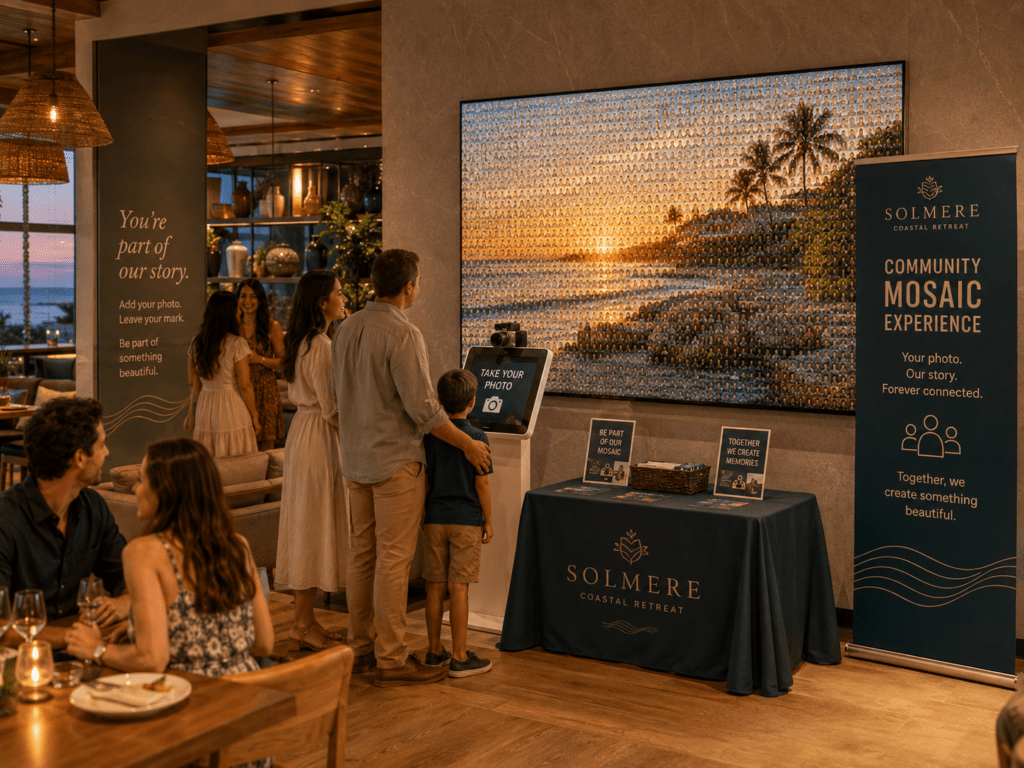
A photo mosaic wall turns individual participant photos into small tiles that come together to create one larger image. Instead of guests simply taking a photo and moving on, every contribution becomes part of a collaborative visual that grows throughout the experience.
For organizations, venues and event planners, that larger image can represent a company, school, community, campaign, anniversary, destination, couple, fundraiser or other shared purpose. The format can be used as a 30–90 day temporary installation or condensed into a single-day event rental for corporate events, brand activations, weddings, fundraisers, conferences and other gatherings.
What is a photo mosaic wall?
A traditional photo mosaic is one large image made from hundreds or thousands of smaller photographs. A live photo mosaic wall brings that idea into an interactive environment. Participants contribute photos during an installation or event, and those images are added to the larger composition as the project develops.
The finished image is chosen before the experience begins. It might be an organization logo, a piece of campaign artwork, a school mascot, a landmark, a meaningful photograph, a wedding portrait or another approved visual. Participant photos then become the smaller tiles that collectively form that master image.
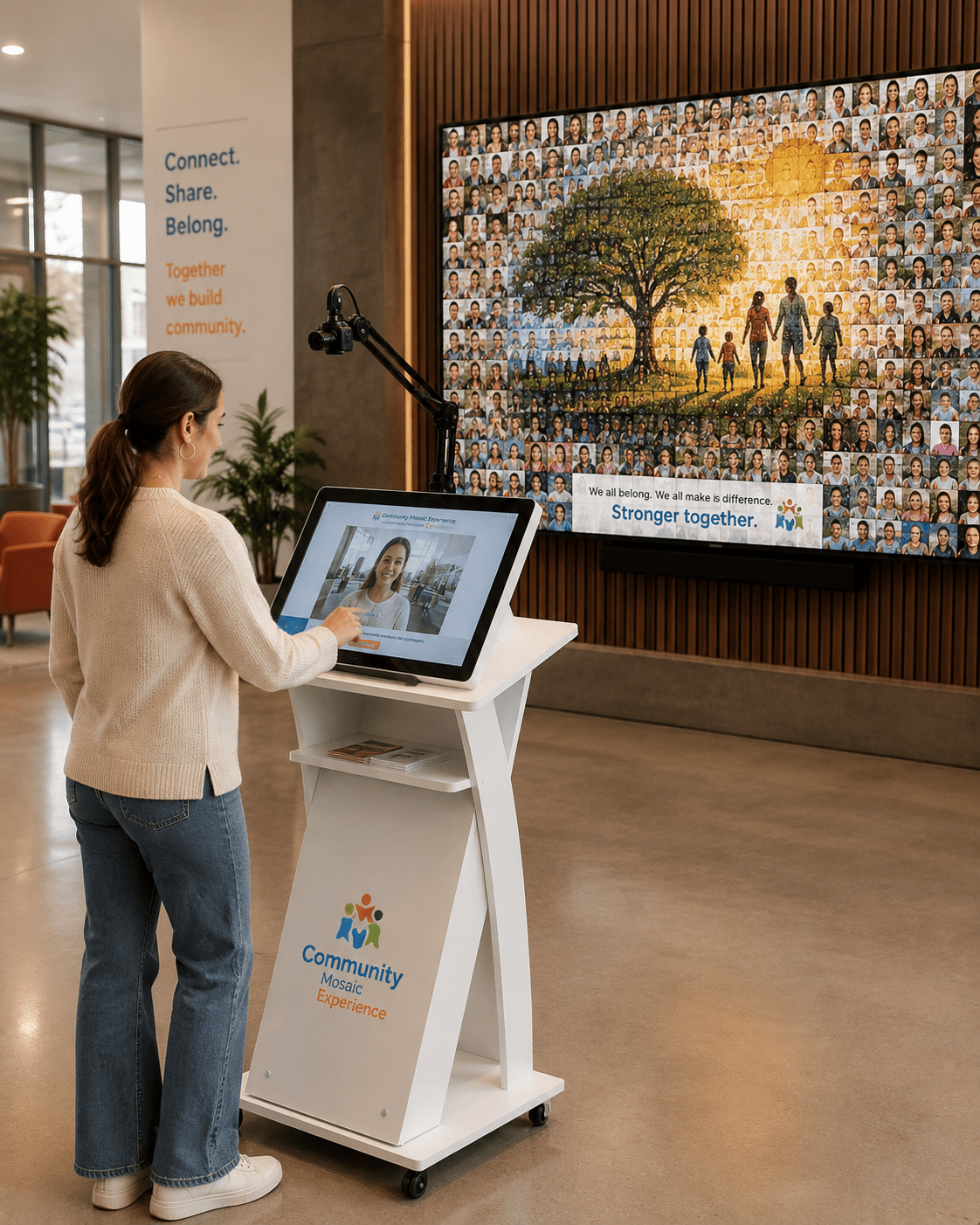
Metamora Works calls its version the Community Mosaic Experience . It is designed around participation rather than simply displaying a finished graphic. The audience helps create the final result.
Photo mosaic wall installations for 30, 60 or 90 days
The first way organizations can use the Community Mosaic Experience is as a temporary 30–90 day installation. This is different from a one-night event rental because the experience remains in place long enough for multiple groups of people to discover it and contribute over time.
A temporary installation can work especially well in a college student center, museum, corporate campus, hospital lobby, visitor attraction, community space, hotel, library or other location with repeat foot traffic. Someone might see the mosaic early in the installation, contribute a photo, and return weeks later to see a much more complete image.
30-day installations
A 30-day photo mosaic wall can support a focused campaign, awareness month, anniversary, seasonal program, employee initiative or short-term exhibition. The shorter duration works best when the host already has regular traffic and a clear plan for encouraging participation.
60-day installations
A 60-day installation creates more time for different departments, classes, shifts, families, visitors or community members to participate. It can be a strong middle option when an organization wants the installation to become a recognizable part of the environment without committing to a full quarter.
90-day installations
A 90-day photo mosaic wall gives the largest participation window and is often the best fit for organizations that want the project to evolve gradually. Longer duration can also create opportunities for recurring promotion, internal communications, social content and milestone updates as the image becomes more complete.
Learn more about Metamora Works' temporary Community Mosaic installations and how they can be adapted to a host location.
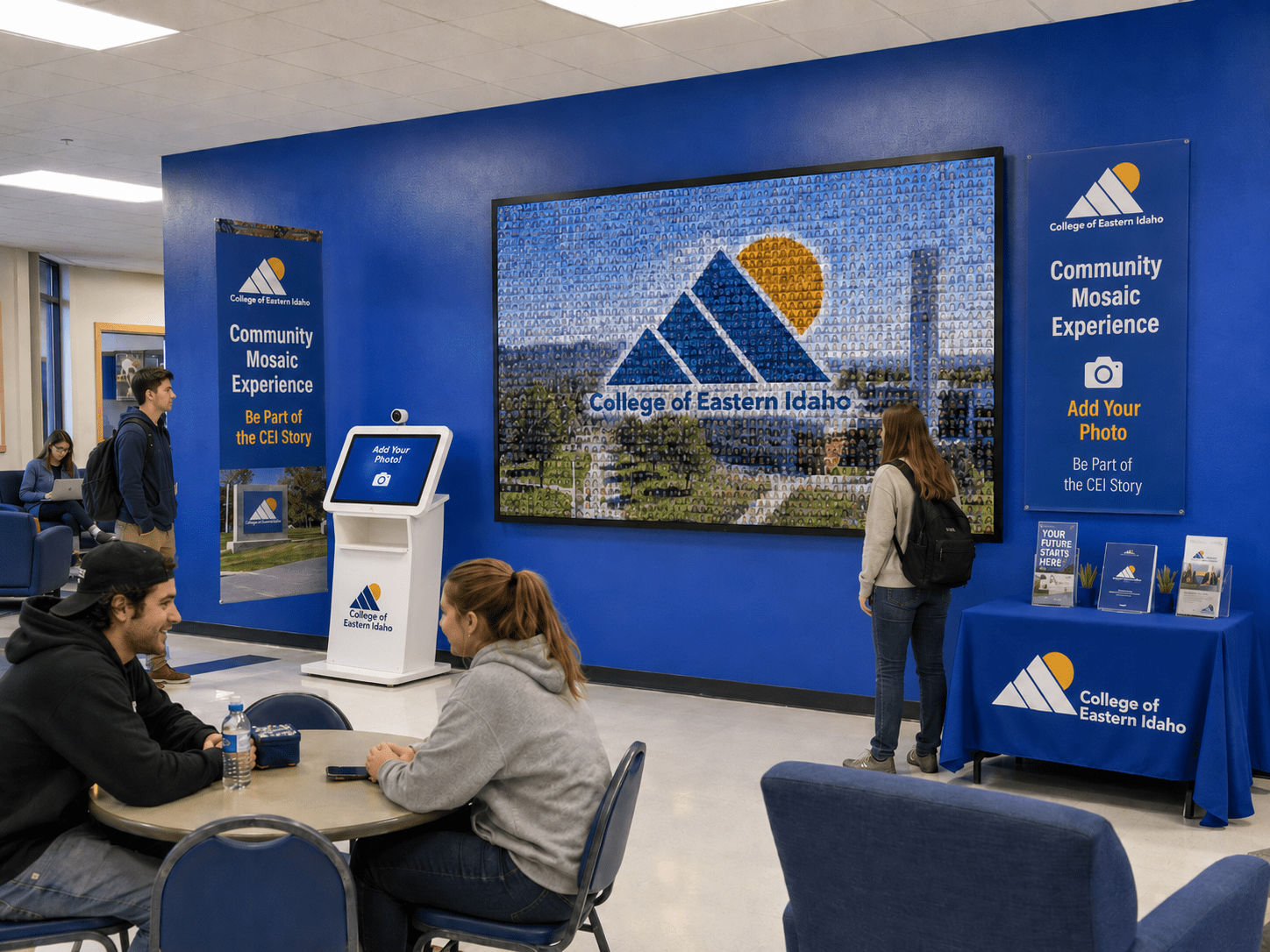
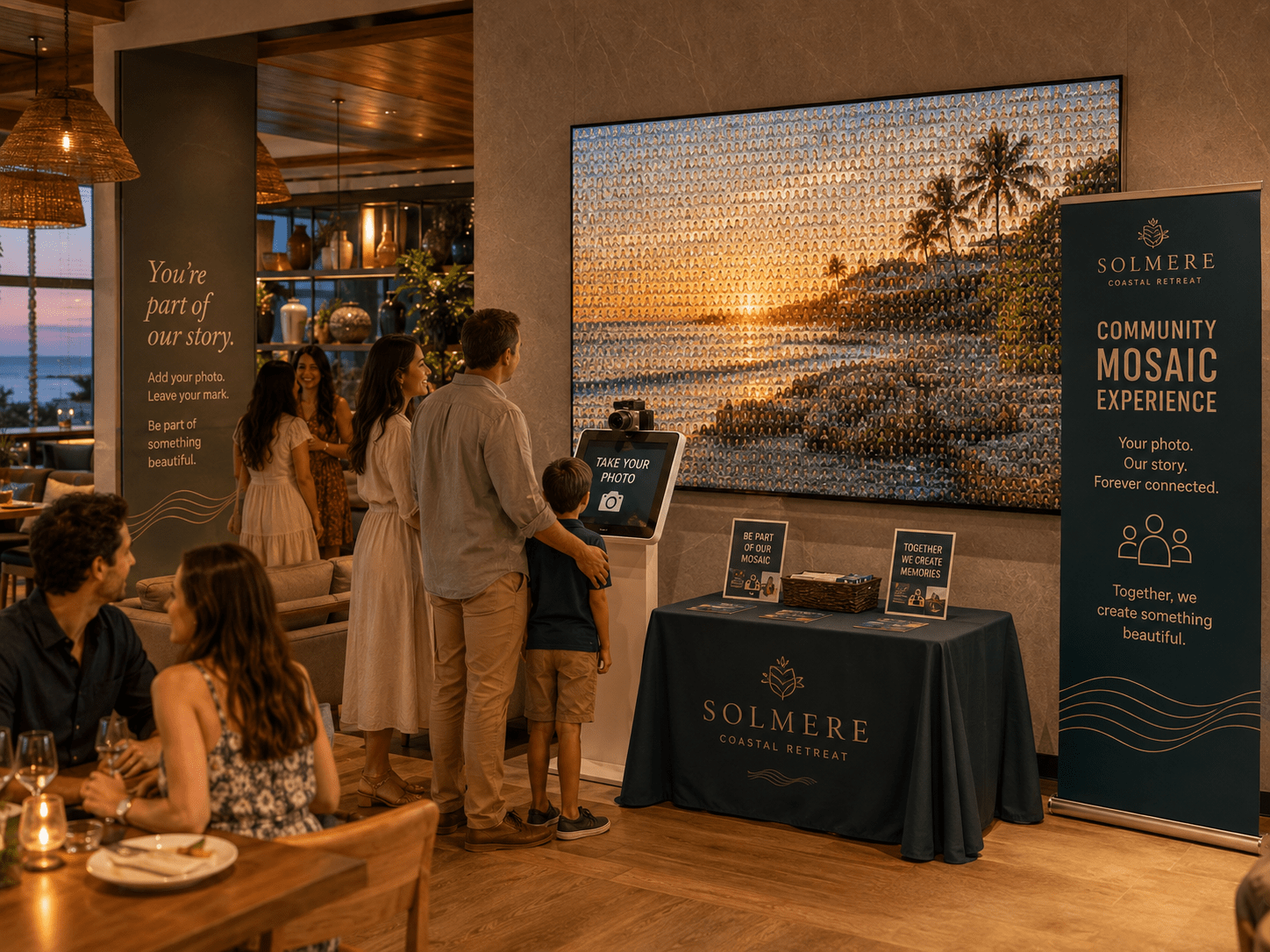
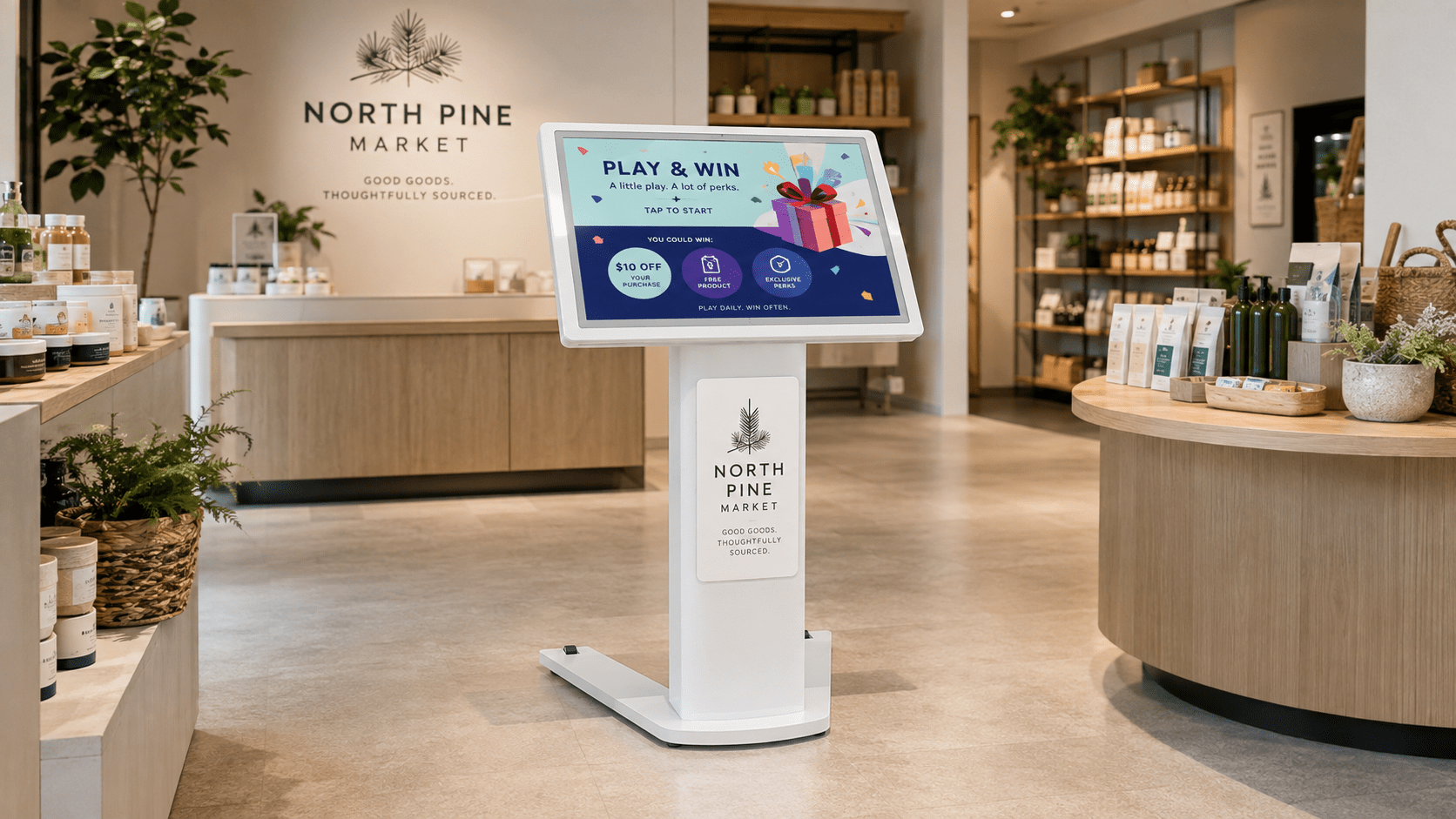
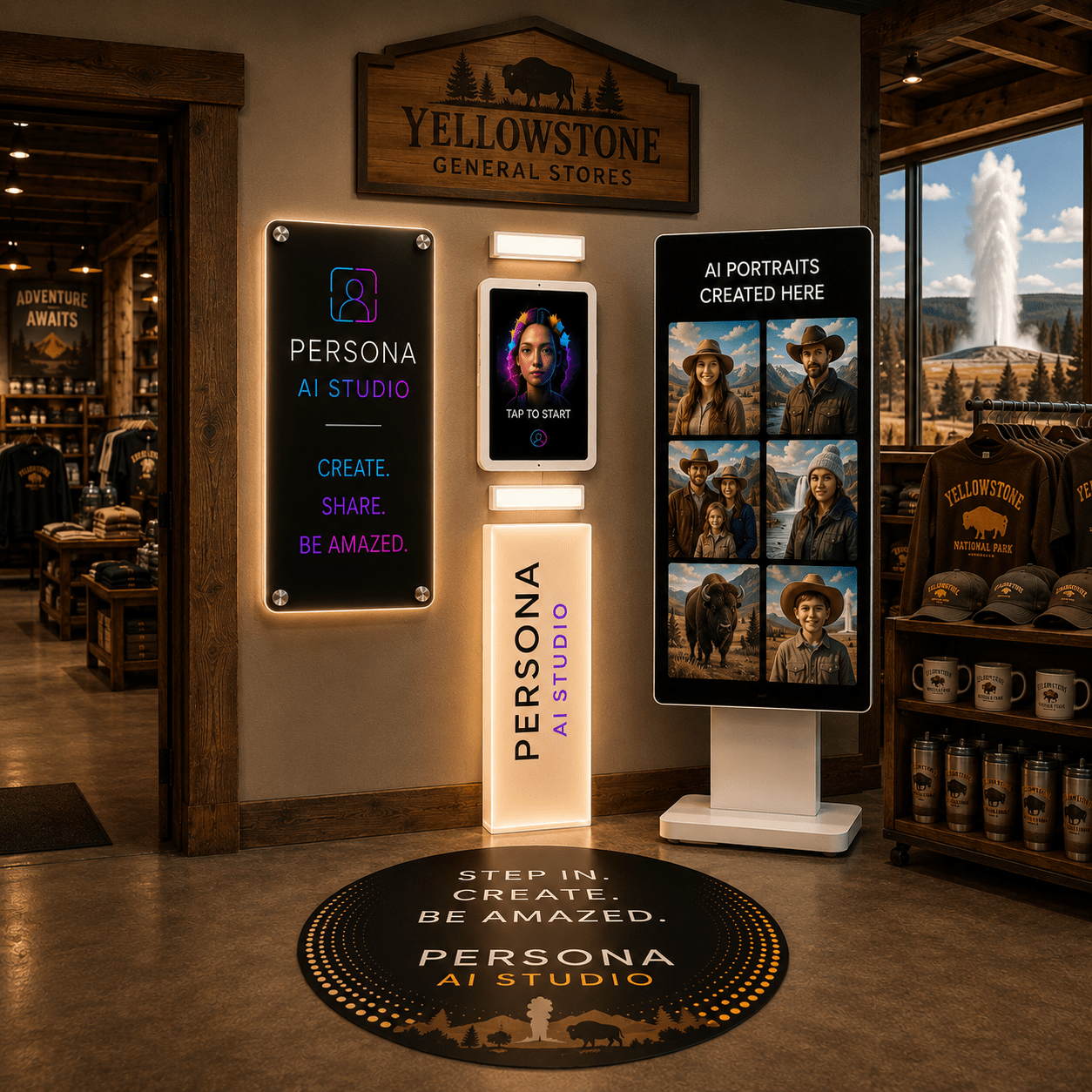
The installation images in this guide are concept visualizations used to illustrate possible configurations. Final equipment, placement, branding and artwork are customized for each project.
How does a photo mosaic wall work?
The exact workflow can be customized, but the participant experience should remain simple. A successful photo mosaic wall should not require guests to understand the technology behind it.
- 1. A master image is selected. The organization and Metamora Works determine the larger image the mosaic will ultimately create.
- 2. Participants contribute photos. Guests intentionally approach the capture station and take a photo or use another approved contribution method.
- 3. Photos are added to the mosaic. Each approved image becomes one of the smaller visual tiles used to build the larger composition.
- 4. The mosaic evolves on the display. Participants can see the project become richer and more recognizable as additional photos are added.
- 5. The finished mosaic becomes a lasting asset. The completed artwork can continue as a digital display, high-resolution file, recap video, social asset or other approved deliverable.
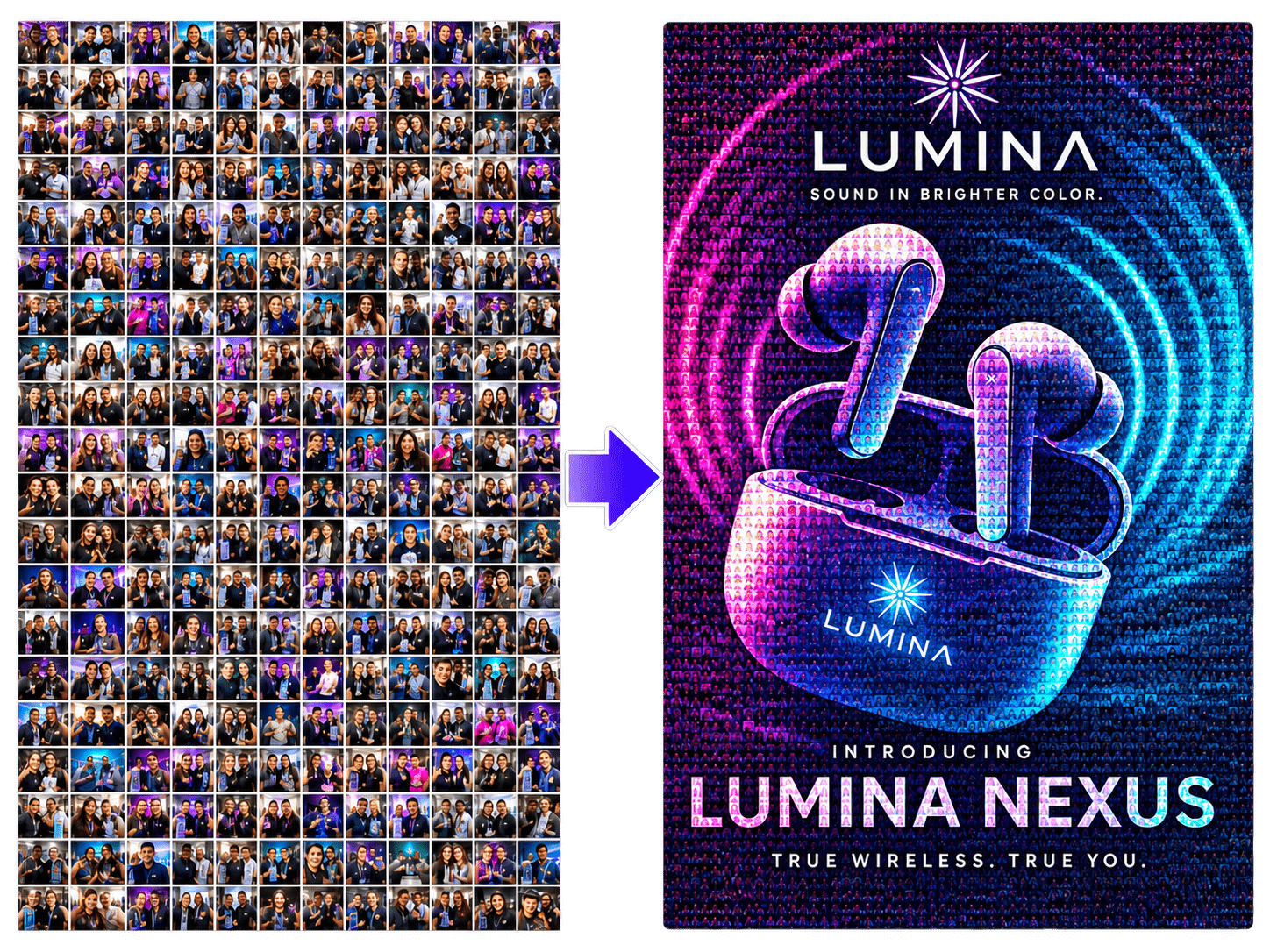
The host selects the larger visual the project will ultimately reveal.
Guests intentionally use the capture station or approved contribution method.
Each approved photo becomes part of the developing mosaic composition.
The shared artwork becomes more complete as participation increases.
The completed mosaic can continue as a digital, print or recap asset.
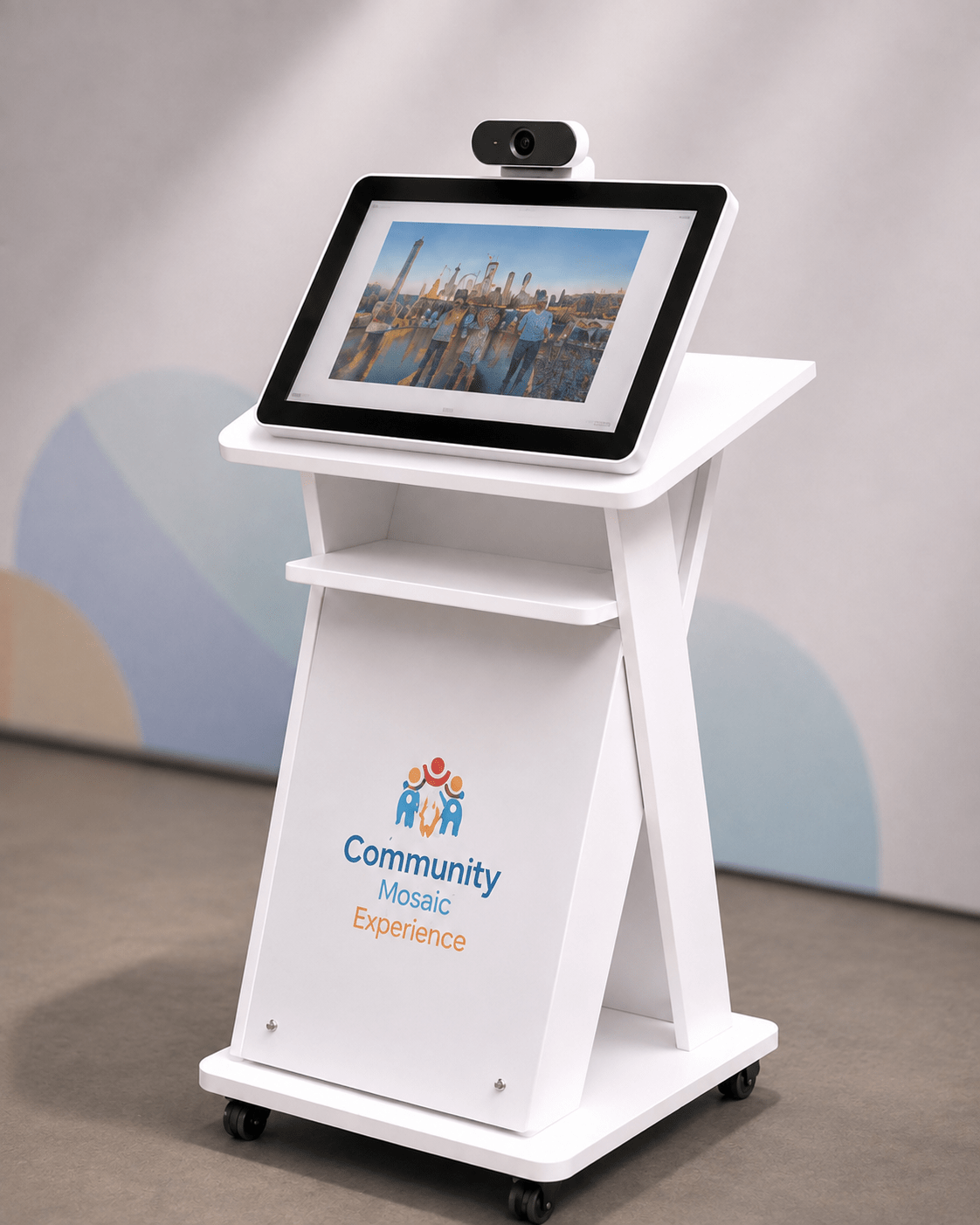
The capture station is intentional—not a surveillance camera
Participants walk up to the kiosk, begin the experience and intentionally take a photo. The system is not designed to automatically photograph people simply because they walk through the surrounding area.
For locations where privacy is especially important, the capture station can be positioned so the camera faces a blank wall, branded background or other controlled area. This can help keep unrelated visitors, customers, patients or staff from appearing in the background of a participant's photo.
Photo moderation can also be incorporated into the workflow so images can be reviewed before they become part of the public-facing mosaic.
What should an organization plan before installing a photo mosaic wall?
The best location is not always simply the busiest location. Organizers should think about visibility, traffic flow, power, network access, camera direction, accessibility, guest comfort and whether the surrounding area is appropriate for photography.
Location and background
A controlled capture area is preferable to pointing a camera into a busy hallway or open crowd. A blank wall, branded backdrop or other defined background helps make the photo cleaner while reducing the chance that unrelated people appear behind the participant.
Participation and consent
Organizations should decide who is invited to participate, what information is presented before a photo is submitted, whether any additional consent language is appropriate, and how submitted images may be displayed or used after the installation.
Privacy-sensitive environments
Hospitals, healthcare organizations, schools and other privacy-sensitive environments should involve their own compliance, legal or privacy teams when designing the participation workflow. For healthcare organizations in particular, the U.S. Department of Health and Human Services explains that covered entities are expected to use reasonable safeguards to protect health information and limit impermissible incidental disclosures. Organizations can review HHS guidance on incidental uses and disclosures when evaluating their own policies and requirements.
The goal is not to place a camera in a busy space. The goal is to create a clearly defined, voluntary participation point where people understand exactly when they are contributing.
Digital photo mosaic wall vs. physical photo mosaic wall
Photo mosaic walls can be produced digitally or physically. Both formats use individual photos to create a larger image, but the guest experience and operational requirements are different.
Digital Photo Mosaic Wall
Best suited to longer installations, cleaner footprints and organizations that want an evolving large-screen display without requiring guests to handle physical tiles.
Physical Photo Mosaic Wall
Best suited to experiences where physically placing the tile is part of the engagement and the finished wall itself is intended to become a tangible display.
Digital photo mosaic wall
A digital mosaic displays the developing artwork on a large screen. For 30–90 day temporary installations, this is generally the more streamlined option because there are no physical tiles for participants to place and the display can update as new photos are approved.
Digital installations are also easier to adapt for organizations that want a clean footprint, centralized moderation and a final high-resolution digital deliverable.
Physical photo mosaic wall
A physical mosaic uses printed photo tiles that are placed onto a larger wall or display surface. The act of physically adding a tile can create an additional hands-on moment for participants, making it especially interesting for certain events, conferences, brand activations and celebrations.
Physical mosaics require additional production materials, printing and wall components, so organizers should consider space, staffing, installation logistics and the desired final display when choosing between formats.
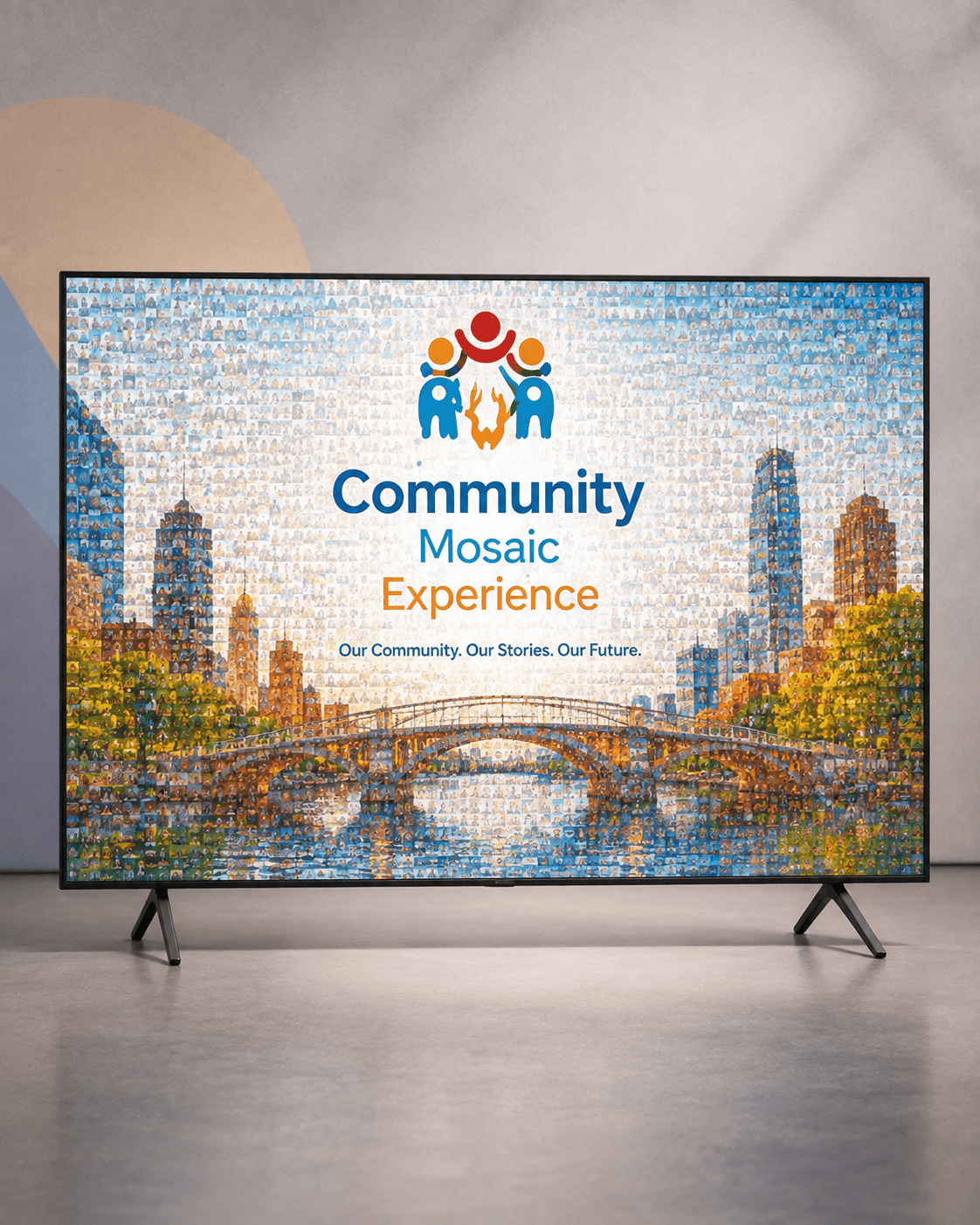
Why the digital format works well for longer installations
The digital format allows the mosaic to remain visually active without requiring participants to handle printed tiles. The larger image can stay on display while new contributions are added throughout the installation.
That makes it a strong fit for organizations that want an experience that can live in a public-facing environment for several weeks while remaining relatively simple for guests to understand.
Photo mosaic wall rentals for corporate events, weddings and more
The same concept can also be condensed into an event rental. Instead of developing across several weeks, the mosaic grows during a reception, conference, fundraiser, company event, brand activation or other gathering. Guests can contribute throughout the event and watch the larger artwork become more complete.
Event planners frequently look for ways to encourage active participation rather than passive attendance. Cvent describes attendee engagement in terms of how much people actively participate in and gain from an event program. Its event engagement guide offers additional ideas for planners considering interactive experiences.
Build a company image from the people behind the organization during anniversaries, launches, recognition events or internal campaigns.
Use participant photos as the visual material that gradually creates branded artwork throughout an activation.
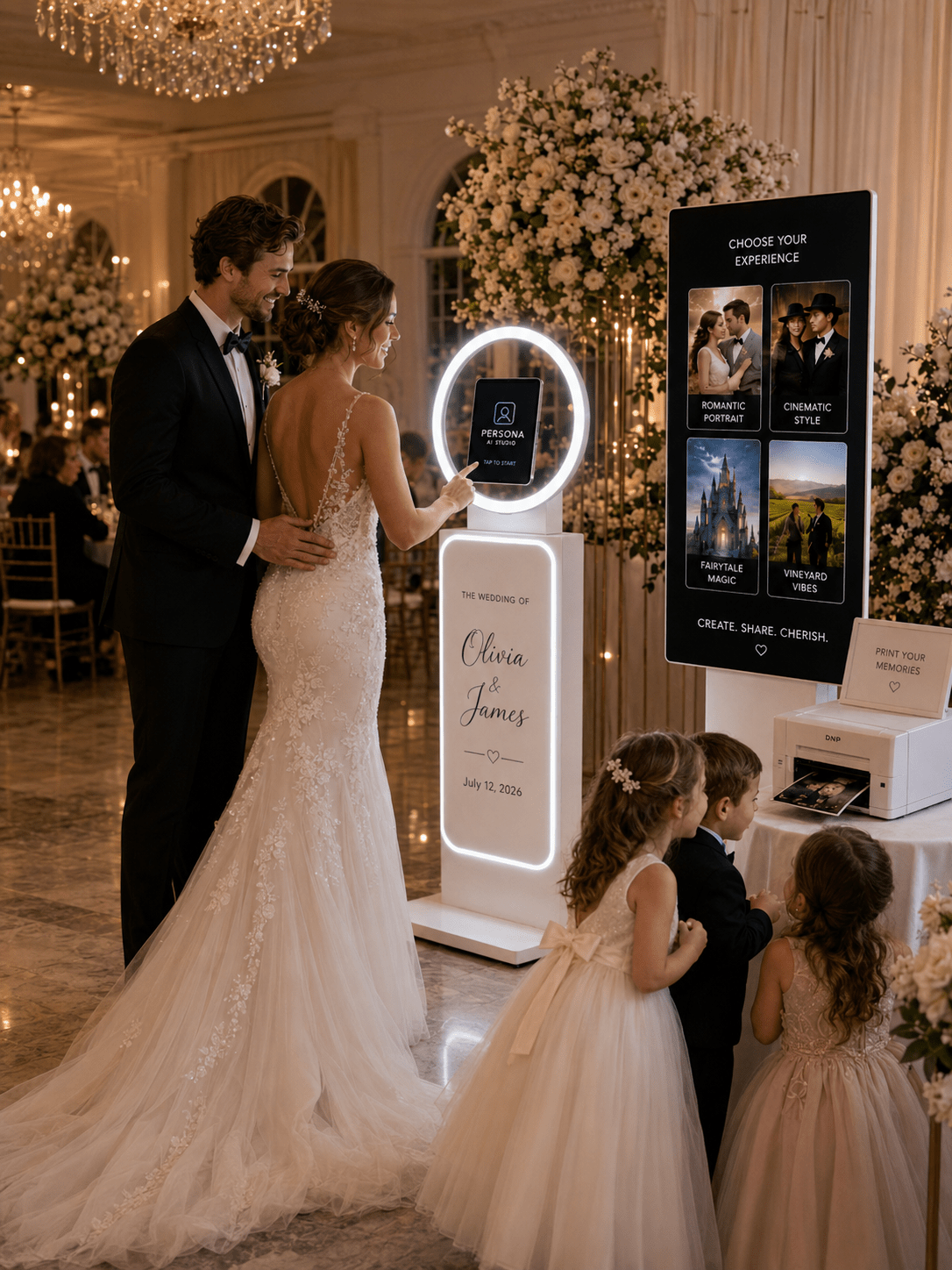
Turn guest photos into a larger image of the couple, monogram or another meaningful wedding visual.
Build a cause-driven image from the people attending and supporting the organization.
Collect contributions throughout a conference, summit or multi-day gathering.
Use the mosaic for universities, museums, festivals, civic programs and other shared community experiences.
Corporate events and employee experiences
Companies can use a photo mosaic wall for anniversaries, employee recognition, conferences, holiday events, launches and internal campaigns. The final image might be a company logo, anniversary mark, campaign creative or other branded artwork built from the people attending.
Brand activations
A branded mosaic can turn audience participation into part of the campaign. Instead of simply placing a logo beside an interactive experience, the participants themselves become the visual material used to create the branded image.
Explore Metamora Works' Community Mosaic brand activations for campaigns and audience experiences.
Weddings
At a wedding, guest photos can gradually build a larger image of the couple, a wedding monogram or another meaningful visual. The completed mosaic can become a collaborative record of the people who attended rather than simply another collection of individual reception photos.
Fundraisers and nonprofit events
A fundraiser can center the mosaic around the cause, organization, campaign or community being supported. Each contribution becomes a visible reminder that the larger mission is made up of individual supporters.
Conferences, colleges and community events
Conferences, universities, museums and community organizations can use a mosaic as a shared visual destination that develops as attendance grows. The American Alliance of Museums' audience engagement and visitor experience resources provide additional perspective for organizations thinking about how people interact with public-facing experiences.
Organizations that do not need a 30–90 day installation can explore Community Mosaic Experience rentals for special events . The event format uses the same collaborative idea in a shorter, more concentrated timeframe.
What does the host organization need to provide?
Exact requirements depend on the installation, but planning typically begins with a suitable location, electrical power, dependable internet access and enough room for participants to comfortably use the capture station without blocking normal traffic.
Metamora Works works with the host on the visual concept, equipment placement, branding, capture workflow and final mosaic design. Temporary installations are intended to be managed experiences rather than equipment that is simply dropped off and left without support.
- A suitable indoor location with appropriate guest traffic.
- Access to electrical power for the capture and display equipment.
- Reliable Wi-Fi or another approved network connection.
- A controlled camera direction or background where appropriate.
- An approved master image, campaign theme or organizational visual.
- A contact person for coordination, access and organizational approvals.
Organizer Checklist
What happens when the photo mosaic is finished?
The completed mosaic can continue beyond the installation or event. Depending on the project, the organization may receive a high-resolution final mosaic, a digital presentation asset, an online gallery and a rendered video showing the completed visual.
That final result is one of the reasons a photo mosaic wall is different from many other interactive experiences. The individual photo is not the end product. The larger collaborative image is the piece everyone helped create.
Photo mosaic wall FAQ for organizations and event organizers
Does the camera automatically photograph people walking by?
No. The capture experience is designed for intentional participation. A guest approaches the station and chooses to take a photo. For sensitive locations, the kiosk can also be aimed toward a blank wall or controlled background.
Can photos be moderated?
Yes. A moderation workflow can be used so submitted images are reviewed before appearing in the public-facing mosaic.
How long does a temporary installation last?
Metamora Works offers temporary installation formats of 30, 60 and 90 days. The best duration depends on traffic, the number of expected participants and the purpose of the project.
Can a photo mosaic wall be used for a single event?
Yes. Event rentals can be designed for corporate events, weddings, conferences, fundraisers, brand activations, university events and other special gatherings.
Can the final image and experience be branded?
Yes. The larger image, surrounding graphics, capture experience and other visual elements can be customized around the organization or event.
Are the installation images in this guide photographs of completed projects?
No. The installation visuals shown here are concept images created to demonstrate possible layouts and uses for the Community Mosaic Experience. Final installations are designed around the actual host location.
It helps to know the approximate installation dates, expected audience, possible location, final image or campaign idea, whether the project should be digital or physical, and any privacy, branding or organizational requirements that should be considered during planning.
Is a photo mosaic wall right for your organization or event?
A photo mosaic wall is a strong fit when the goal is to give people a simple way to participate in something larger than their individual photo. It can turn employees into part of an anniversary image, students into part of a campus story, wedding guests into part of a keepsake, supporters into part of a fundraiser visual or visitors into part of a community installation.
The most important planning question is not how many photos the system can collect. It is what should all of those photos become together? Once the larger story is clear, the mosaic gives participants a visible way to become part of it.
Build one larger story from the people who take part.
Metamora Works offers 30–90 day Community Mosaic Experience installations along with condensed rentals for corporate events, brand activations, weddings, fundraisers, conferences and other special events.